Creating an HTML transcript from an MP3 file involves extracting the spoken content from an MP3 file, converting it into text using AI transcription, and exporting it as an editable HTML document. You upload the MP3 file, the system transcribes the speech automatically, and outputs structured HTML that can be edited, formatted, and published online in just a few minutes.
VOMO makes this process simple and reliable. You can upload MP3 files directly, generate accurate AI-powered transcripts, and export clean HTML ready for blogs, websites, or documentation. It’s perfect for podcasts, interviews, lectures, and any other MP3 files that need web-ready formatting.

What Is an HTML Transcript for MP3 Files?
An HTML transcript is a written version of the spoken content in an MP3 file, formatted using HTML elements such as headings, paragraphs, and lists. Unlike plain text or PDF files, HTML transcripts are optimized for online use and allow easy editing and publishing.
Most transcription platforms rely on audio to text technology to process the MP3 file. The AI detects speech, organizes text into paragraphs, and ensures the transcript is readable and searchable for both users and search engines.
Why Convert MP3 Files into HTML Transcripts?
Converting MP3 files into HTML transcripts provides several advantages:
- Makes audio content searchable for SEO
- Improves accessibility for listeners who prefer reading
- Allows easy reuse of audio content on websites and blogs
- Supports flexible formatting and styling
- Helps organize content efficiently for online publishing
HTML transcripts help extend the value of MP3 files beyond just listening.
步骤1:将您的MP3文件上传至转录工具

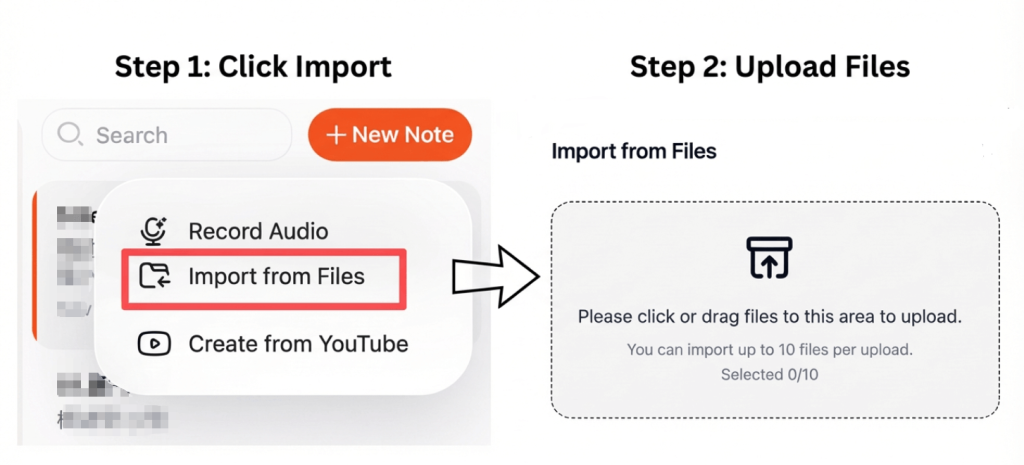
Start by choosing a transcription platform that supports MP3 files. Most AI tools allow direct uploads from your device or cloud storage.
为获得最佳效果:
- Use clear, high-quality audio
- 尽量减少背景噪音
- 选择正确的语言和口音
- 语速平稳
High-quality input ensures accurate HTML transcripts.
Step 2: Automatically Convert MP3 File into Text
Once uploaded, the transcription tool converts the spoken content in your MP3 file into text using AI. The platform automatically adds punctuation, separates paragraphs, and identifies speakers if needed.
This process is also known as audio to text conversion. For video content, a similar process is called video to text conversion, but here the focus is solely on MP3 files.
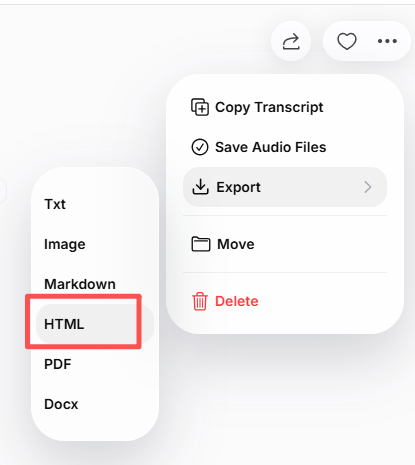
Step 3: Export the Transcript as an HTML Document

After reviewing and editing the transcript, you can export it as an HTML file. Most tools allow you to:
- Edit text before exporting
- Add headings and structured sections
- Include timestamps or speaker labels
- Maintain clean and readable HTML formatting
The resulting HTML file can be embedded into websites, blogs, or CMS platforms immediately.
Common Use Cases for MP3 File to HTML Transcripts
MP3 file to HTML transcripts are commonly used for:
- Publishing podcast transcripts on websites
- Creating readable lecture notes or training materials
- Archiving interviews and discussions
- Improving accessibility for audio content
- Reusing audio content across multiple platforms
HTML transcripts make MP3 files more versatile and easier to share.
Tips to Improve MP3 File Transcription Accuracy
为了达到最佳效果:
- 使用清晰、高质量的录音
- 尽量减少背景噪音
- Speak clearly and avoid overlapping speech
- Proofread the transcript
- Organize text with headings and proper paragraphing
These steps help ensure polished, accurate HTML transcripts.
结论
Creating an HTML transcript from MP3 files is a fast and effective way to convert spoken content into editable, web-ready text. By uploading your MP3 file, letting AI handle transcription, and exporting clean HTML, you can enhance accessibility, boost SEO, and make your audio content reusable online.
This workflow saves time and allows MP3 files to be published, indexed, and shared easily.