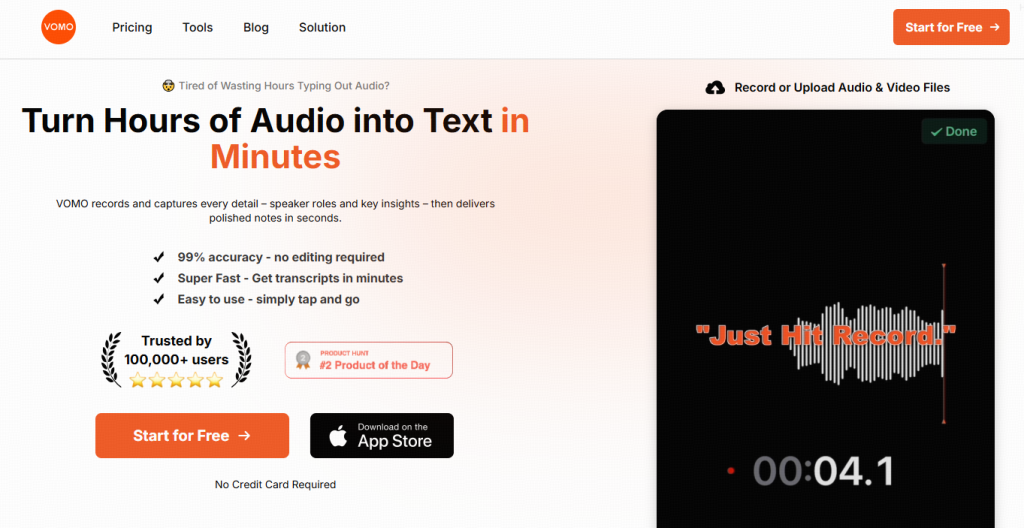
Converting an M4A audio file to an image involves transcribing the spoken content into text and then exporting that text as a visual image format like PNG or JPG. AI tools such as VOMO make this process seamless and accurate. Instead of manually typing captions or notes, you can generate professional, shareable visual transcripts directly from your M4A audio in just a few clicks.

What It Means to Convert M4A to Image
Converting M4A to image is not simply creating a visual waveform. It involves:
- Extracting the spoken words from the M4A file
- Transcribing the audio into text (音訊轉文字)
- 將謄本匯出為視覺格式化的影像
This method is ideal for creating lecture notes, social media posts, meeting summaries, or quote cards from audio content. AI tools ensure accuracy, clarity, and readability.
Why AI Tools Are Essential for M4A-to-Image Conversion
Manual transcription and formatting of audio can be tedious. AI simplifies this workflow by:
- Automatically transcribing spoken words from the M4A file
- Summarizing key points automatically
- Formatting the text for visual presentation
- Exporting the result as an image file
VOMO provides an all-in-one solution that is perfect for beginners and professionals, offering speed, accuracy, and high-quality visual outputs.
Step 1: Upload Your M4A File
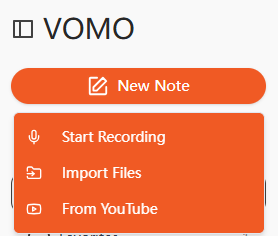
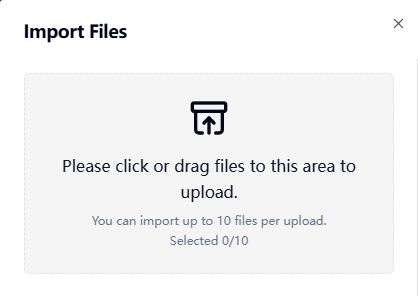
Start by uploading your M4A file to an AI 轉錄 platform. Most tools support drag-and-drop uploads or URL-based imports. Clear, high-quality audio ensures the transcription will be precise.


Step 2: Transcribe Audio into Text
The AI tool will process your M4A audio and convert it into readable text. This is effectively performing 視訊轉文字 when applied to audio-visual content, producing structured, editable transcripts. Advanced AI platforms can summarize key points automatically, reducing manual editing effort.
步驟 3:將謄本匯出為影像

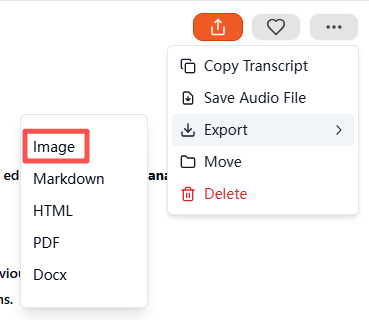
轉錄完成後,選擇 圖片 as the output format. The tool will generate a compressed ZIP file containing the visual transcript. Each image contains a neatly formatted version of the text, ready to save, share, or archive. This ensures professional and visually appealing results.
支援的音訊與視訊格式
AI transcription tools typically support a wide range of formats:
| 媒體類型 | 支援的格式 |
|---|---|
| 音訊 | M4A, MP3, WAV, AAC |
| 視訊 | MP4, MOV, MKV, AVI, FLV |
You can convert both standalone audio and video files using the same workflow for visual transcript output.
Best AI Tools for M4A-to-Image Conversion
推薦的 AI 工具包括
- VOMO – Complete AI transcription and image export solution
- Descript – Audio and video editing with transcription
- Otter AI – Collaborative transcription with export options
- Notta AI – Multi-language support and visual export
- Veed.io – Simple formatting for social media-ready visuals
其中包括 VOMO stands out for automatic summarization, ZIP image export, and beginner-friendly workflow.
Practical Use Cases for M4A-to-Image Conversion
Converting M4A audio into visual text images is useful for many scenarios:
| 使用個案 | 範例 |
|---|---|
| 教育 | Lecture recordings, study notes |
| 業務 | Meeting or conference audio summaries |
| 內容創作 | Podcast quotes, social media visuals |
| 無障礙 | 聽障使用者的視覺謄本 |
| 研究 | Timestamped notes from audio sources |
Visual transcripts are easy to store, share, and consume compared to plain audio or text files.
Tips for High-Quality M4A-to-Image Conversion
To achieve the best results:
- Record in quiet environments with minimal background noise
- Speak clearly and maintain a consistent pace
- 使用高品質的麥克風進行錄音
- 審查 AI 生成的摘要是否準確
- Highlight key points or timestamps before exporting
遵循這些步驟可確保影像謄本專業、易讀且具有視覺吸引力。.
總結
Converting M4A to image is simple with AI transcription tools. By uploading an audio file, generating a transcript, and exporting it as an image, platforms like VOMO save time and produce polished, shareable content. Whether for education, business, or content creation, AI-driven M4A-to-image conversion provides a fast and professional way to repurpose your audio content into visually appealing documents.