
Can You Upload Audio Files to ChatGPT? What Works and What to Do Instead
Can ChatGPT handle audio files? Learn the difference between audio uploads, Record mode, Voice mode, and the reliable transcript-first workflow.
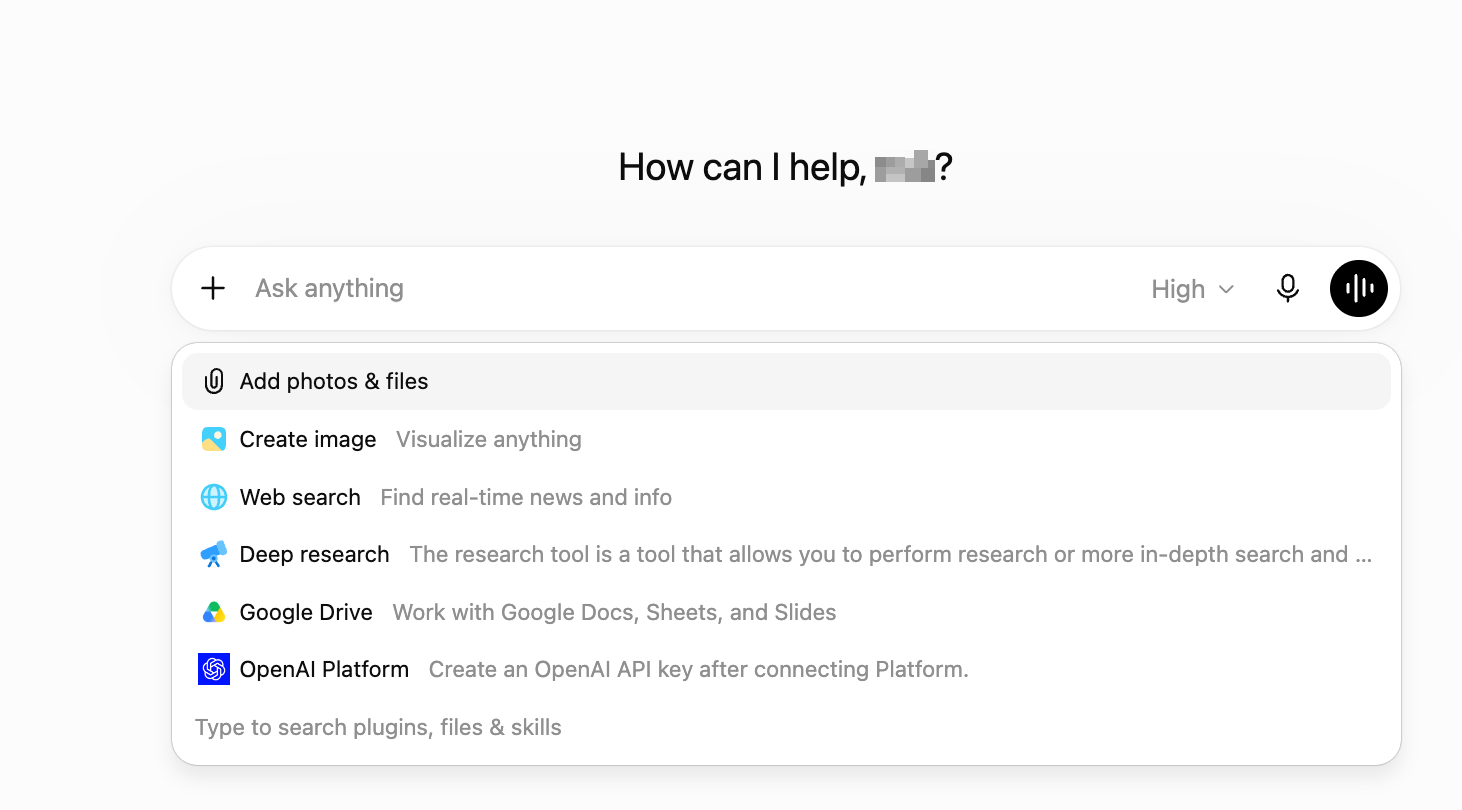
You may be able to use audio with ChatGPT, but the right workflow depends on what you mean by "upload audio." There are three different situations people mix together:
- Uploading an existing audio file, such as MP3, WAV, or M4A.
- Recording a live meeting or voice note in ChatGPT.
- Talking to ChatGPT through Voice mode.
If you already have an audio file and you need a reliable transcript, summary, or action items, the safest workflow is still:
Audio file -> VOMO Audio to Text -> transcript with timestamps -> summary/key takeaways/action items -> Ask AI or ChatGPT.
For format-specific files, use MP3 to Text or M4A to Text first, then bring the transcript into ChatGPT if you want extra writing or analysis.
What You Are Probably Trying to Do
This search usually comes from a practical task, not curiosity about file support. Match the task first.
What you want | Best workflow |
|---|---|
Transcribe an existing MP3 | Use MP3 to Text, then summarize |
Transcribe an iPhone voice memo | Use M4A to Text |
Turn a meeting recording into notes | Audio to Text -> action items |
Record a live meeting in ChatGPT | Use ChatGPT Record mode if available in your workspace |
Have a spoken conversation with ChatGPT | Use Voice mode, not file upload |
Ask ChatGPT about a long recording | Create a transcript first, then paste or upload the text |
Export audio notes for a report | Use transcript exports such as MP3 to PDF or MP3 to HTML |
The key point: ChatGPT is useful after it has readable content. For existing recordings, a transcript gives it much cleaner input than a raw audio file.
Audio File Upload vs Record Mode vs Voice Mode
These are not the same feature.
Feature | What it is best for | Limitation |
|---|---|---|
File upload | Documents, data files, and supported uploaded content | Audio-file behavior can vary by account, app, and workflow |
ChatGPT Record | Capturing meetings, brainstorms, and voice notes | Available only in specific plans/workspaces and on the macOS desktop app |
Voice mode | Real-time spoken conversation with ChatGPT | Not the same as uploading a long existing audio file |
Transcript-first workflow | Reliable analysis of existing recordings | Requires converting audio to text first |
OpenAI's ChatGPT capabilities page describes file uploads mainly around documents, data analysis, and images. OpenAI's Record mode documentation says Record can transcribe and summarize meetings, brainstorms, or voice notes, but it is a specific feature with availability limits. Voice mode is for live spoken conversation, not a general audio-file transcription workspace.
Sources: ChatGPT capabilities overview, ChatGPT Record, and Voice Mode FAQ.
If You Already Have an Audio File
If your audio file already exists, do not spend time guessing whether the current ChatGPT interface will accept it cleanly. Convert it to a transcript first.
File type | Best starting point |
|---|---|
MP3 | MP3 to Text |
M4A | M4A to Text |
WAV or other audio | Audio to Text |
Voice recording | Speech to Text |
Audio extracted from video | Audio to Text |
After transcription, you can use VOMO's summary, key takeaways, action items, and Ask AI. If you still want ChatGPT, paste the transcript or a cleaned-up summary into ChatGPT with a specific prompt.
If You Want to Record Inside ChatGPT
ChatGPT Record mode is different from uploading an old file. It is designed for live meetings, brainstorms, and voice notes. According to OpenAI's Record documentation, it can transcribe and summarize recordings, and the generated summaries are saved as canvases in chat history. OpenAI also notes that Record is currently available for Plus, Enterprise, Edu, Business, and Pro workspaces on the macOS desktop app.
Use Record mode when:
- You are recording something live.
- You are on a supported workspace and app.
- You want ChatGPT's built-in meeting or voice-note summary.
- You understand the consent and privacy requirements for recording others.
Use VOMO when:
- You already have an audio file.
- You need format-specific transcription.
- You want timestamps, exports, folders, or batch file workflows.
- You want to review the transcript before asking ChatGPT to write from it.
If You Want to Talk to ChatGPT
Voice mode lets you speak with ChatGPT in a live conversation. That is useful when you want to brainstorm, ask questions hands-free, or talk through an idea.
But Voice mode is not the same as uploading a 90-minute interview or a downloaded MP3 and asking for a full transcript. For existing recordings, use the transcript-first workflow.
How to Use the Transcript in ChatGPT
Once VOMO creates the transcript, you can use ChatGPT for a second pass. The prompt matters more than the tool name.
Meeting Recording
Use this transcript to create:
1. A short meeting summary
2. Decisions made
3. Action items with owners if mentioned
4. Open questions
5. A follow-up email
Transcript:[paste transcript]
Interview or Research Call
Analyze this interview transcript.
Return:
1. Main themes
2. Repeated pain points
3. Useful quotes
4. Objections or concerns
5. Product or content opportunities
Transcript:[paste transcript]
Voice Memo
Turn this voice memo transcript into:
1. A clear summary
2. A prioritized task list
3. Open questions
4. A polished note I can send or save
Transcript:[paste transcript]
Common Problems
Problem | Why it happens | Better fix |
|---|---|---|
ChatGPT does not accept the audio file | File support can vary by account, app, or workflow | Convert to text first |
Summary is too vague | The model does not have clean source text | Use a timestamped transcript |
Long recording is hard to analyze | Too much content in one prompt | Split transcript by section |
You need exact quotes | AI summaries can paraphrase | Verify quotes in transcript |
Audio contains private information | Consent or policy may apply | Review before uploading or pasting |
FAQ
Can ChatGPT transcribe audio files?
ChatGPT has audio-related features, including Record mode and Voice mode, but for existing audio files the most reliable workflow is to create a transcript first with a dedicated transcription tool.
Can I upload an MP3 to ChatGPT?
The interface and supported workflows can vary. If you need dependable results, use MP3 to Text first, then use ChatGPT on the transcript.
Can ChatGPT Record transcribe meetings?
Yes, when Record mode is available for your workspace and app. OpenAI says Record can transcribe and summarize meetings, brainstorms, and voice notes, but it has availability limits and should be used responsibly when recording others.
Is Voice mode the same as uploading an audio file?
No. Voice mode is for live spoken conversation with ChatGPT. It is not the same as processing an existing audio file into a full transcript and exportable notes.
What should I do with M4A voice memos?
Use M4A to Text, then review the transcript, summary, key takeaways, and action items before using ChatGPT for rewriting or extra analysis.
Should I upload confidential audio to ChatGPT?
Be careful. For customer calls, internal meetings, HR interviews, medical content, legal content, or private voice notes, check consent requirements, company policy, and privacy settings before uploading or pasting content into any AI tool.
Final Recommendation
If you are recording live and ChatGPT Record is available, it may be useful.
If you already have an audio file, use a transcript-first workflow:
Audio file -> VOMO Audio to Text or MP3 to Text-> transcript with timestamps -> summary/key takeaways/action items -> Ask AI or ChatGPT.
VOMO FOR MEETINGS
Transform Your Meetings with VOMO
Experience seamless meeting recording, highly accurate transcription, and intelligent summarization. Let VOMO be your dedicated note-taker while you focus on what matters most.