


Converting WAV audio into an HTML transcript involves extracting the spoken content from a WAV file, using AI to transcribe it into text, and exporting the result as an editable HTML document. You upload the WAV file, AI automatically generates a transcript, and the resulting HTML is ready to edit, format, and publish online within minutes.
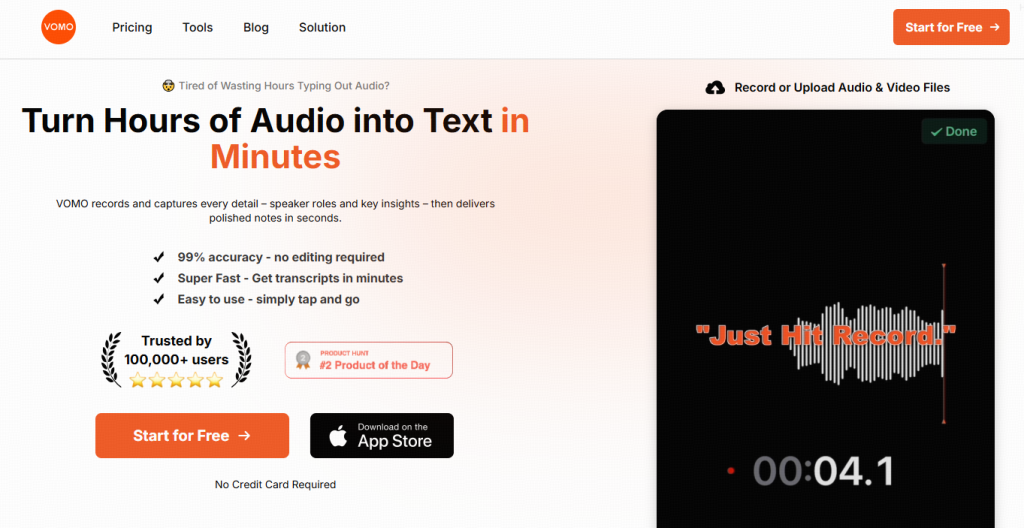
VOMO makes this process effortless. You can upload WAV files directly, produce highly accurate AI-powered transcripts, and export clean HTML that’s perfect for blogs, websites, or documentation. This works especially well for interviews, podcasts, lectures, and any professional recordings that need web-ready formatting.
What Is an HTML Transcript for WAV Audio?
An HTML transcript is a structured text version of the spoken content in a WAV audio file, formatted with HTML elements like headings, paragraphs, and lists. Unlike plain text or PDF transcripts, HTML transcripts are optimized for web use and allow easy editing and publishing.
Most modern transcription platforms rely on audio to text technology to analyze WAV audio files. AI detects speech patterns, inserts punctuation, and organizes content into readable paragraphs, making it searchable and user-friendly.
Why Convert WAV Audio into HTML Transcripts?
Converting WAV files into HTML transcripts provides multiple benefits:
- Makes audio content searchable for SEO purposes
- Improves accessibility for users who prefer reading
- Enables easy reuse of audio content on websites or blogs
- Supports flexible formatting and styling
- Helps organize audio content efficiently
HTML transcripts ensure that WAV recordings are more versatile and impactful online.
Step 1: Upload Your WAV File to a Transcription Tool
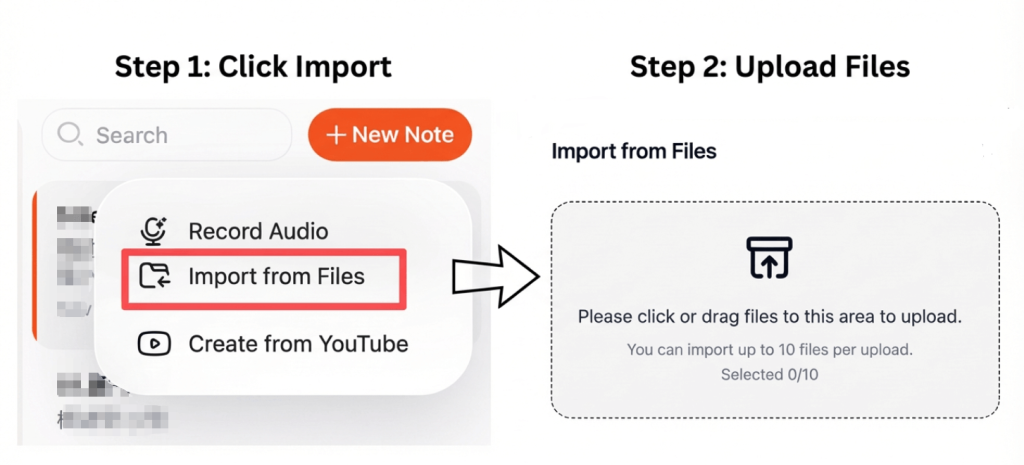
Start by selecting a transcription tool that supports WAV files. Most AI transcription platforms allow direct uploads from your computer or cloud storage.
For best results:
- Use clear and high-quality audio
- Minimize background noise
- Speak at a steady pace and select the correct language
- Avoid overlapping dialogue
High-quality input ensures accurate HTML transcripts.
Step 2: Convert WAV Audio into Text Automatically
Once uploaded, the transcription tool converts the spoken content into text using AI. The system automatically adds punctuation, structures paragraphs, and can identify multiple speakers if necessary.
This process is commonly referred to as audio to text conversion. For multimedia content such as video recordings, a similar workflow is known as video to text conversion.
Step 3: Export the Transcript as an HTML Document
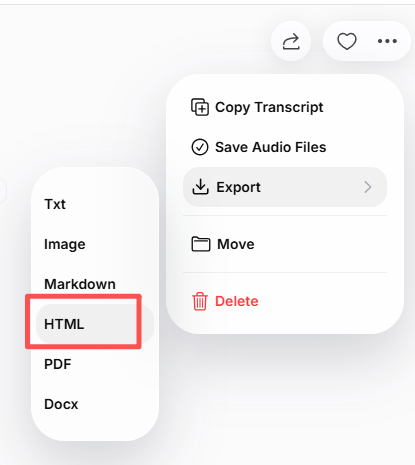
After reviewing the transcript, you can export it as an HTML file. Most tools allow you to:
- Edit text before export
- Add headings and structured sections
- Include timestamps or speaker labels
- Maintain clean and readable HTML formatting
The exported HTML can be embedded in websites, blogs, or CMS platforms immediately.
Common Use Cases for WAV to HTML Transcripts
WAV to HTML transcripts are widely used for:
- Publishing podcast transcripts on websites
- Creating lecture or training notes
- Archiving interviews and research discussions
- Enhancing accessibility for audio content
- Repurposing content across multiple platforms
HTML transcripts make WAV audio files more versatile and easier to share.
Tips to Improve WAV Transcription Accuracy
To get the best transcription results:
- Use high-quality and clear recordings
- Reduce background noise
- Speak clearly and avoid overlapping speech
- Proofread and edit transcripts carefully
- Organize text with headings and structured paragraphs
These steps help ensure polished, accurate HTML transcripts.
Conclusion
Converting WAV audio into an HTML transcript is a fast and effective way to transform spoken content into editable, web-ready text. By uploading your WAV file, letting AI handle transcription, and exporting clean HTML, you can improve accessibility, boost SEO, and make your recordings reusable online.
This workflow saves time and makes WAV files easier to publish, search, and share.
