

Converting audio to PDF means transforming spoken content from an audio file into written text and saving it as a well-formatted, shareable PDF document. With modern AIトランスクリプション tools, you can upload an audio recording, let the system automatically transcribe the speech, and export the result as a PDF — all within minutes, without manual typing.
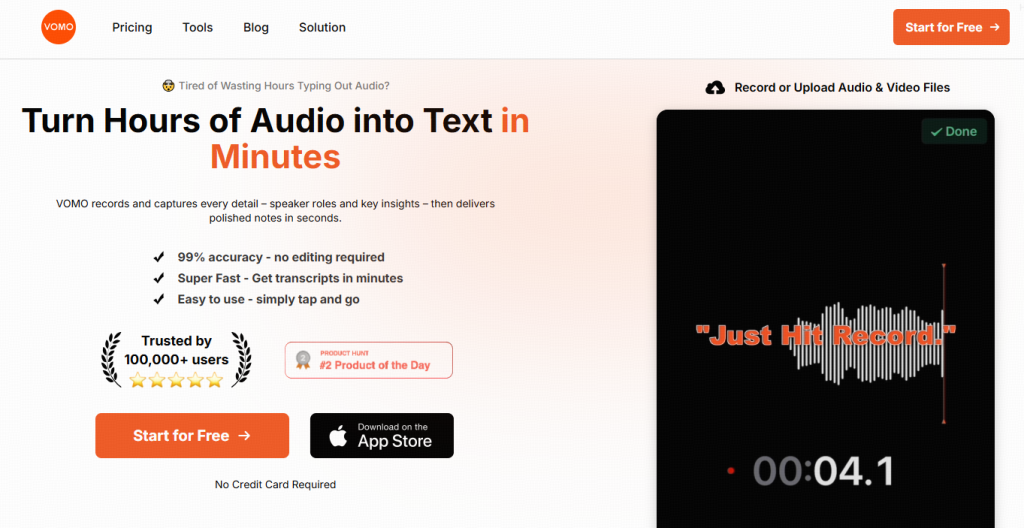
Among many available solutions, VOMO stands out for its reliable transcription quality and ease of use. Even lengthy audio files or multi-speaker recordings can be processed smoothly, producing clean, well-structured text that’s ready to be exported as a polished PDF with minimal manual editing.
What Does Converting Audio to PDF Mean?
Audio files store spoken information but are difficult to search, edit, or share in professional workflows. Converting audio to PDF involves two key steps: transcribing speech into text and formatting that text into a structured document.
Most AI tools rely on 音声からテキストへ technology powered by Automatic Speech Recognition (ASR). These systems analyze speech patterns, recognize words, apply punctuation, and organize content into readable paragraphs that can be exported as a polished PDF file suitable for documentation, archiving, or publishing.
Why Convert Audio Files to PDF?
Turning audio recordings into PDF documents offers clear advantages across many use cases:
- Creates searchable, readable records of meetings, interviews, and lectures
- Improves accessibility for hearing-impaired users
- Simplifies sharing and long-term storage
- Enables easy annotation, printing, and compliance documentation
- Saves hours compared to manual transcription
PDF is especially useful when you need a fixed layout for reports, legal records, or academic materials.
Step 1: Upload Your Audio File to a Transcription Tool

Begin by choosing an AI-powered transcription platform that supports common audio formats such as MP3, WAV, or M4A. Upload your audio file directly from your device or import it from cloud services like Google Drive or Dropbox.
For best results, ensure the recording has clear speech and minimal background noise. Clean audio significantly improves 転写精度 and reduces the need for later edits.
Step 2: Transcribe the Audio Automatically Using AI
Once uploaded, the AI system processes the audio and converts spoken language into written text. Advanced transcription tools can identify speakers, insert punctuation, and structure content into readable sections automatically.
Many platforms also support multimedia workflows — if your content comes from recordings with visuals, the same technology used for ビデオからテキストへ conversion can handle dialogue from video files just as efficiently, ensuring consistent transcripts across formats.
Step 3: Export the Transcript as a PDF File
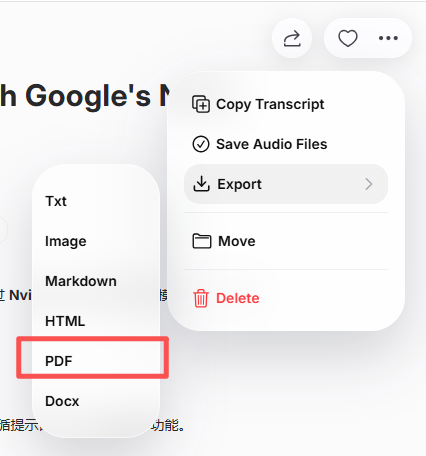
After reviewing and editing the transcript, export it as a PDF. Most tools allow you to choose formatting options such as headings, spacing, timestamps, or speaker labels before downloading.
The final PDF transforms your audio into a professional, searchable document that can be shared, printed, or stored for future reference.
Best Tools to Convert Audio to PDF
Several AI transcription tools support direct PDF export and deliver reliable results:
- VOMO – Clean interface, accurate transcription, and easy PDF export
- オッターAI – Strong for meetings and collaborative workflows
- ノッタAI – Fast transcription with multilingual support
- 説明 – Combines transcription with audio editing features
- Open-source 海難救助 用具 – Suitable for developers and researchers
Each option varies in features, pricing, and supported formats, but all simplify audio-to-PDF conversion.
Tips to Improve Audio-to-PDF Accuracy
To ensure high-quality PDF transcripts:
- Use high-quality recordings with minimal noise
- はっきりと一定のペースで話す
- Select the correct language and accent settings
- Review technical terms or names before exporting
- Adjust formatting for readability in the final PDF
These steps help produce professional documents with minimal errors.
結論
Converting audio to PDF is now a fast, automated process thanks to AI transcription technology. By uploading your audio, letting the system transcribe it, and exporting the result as a PDF, you can create structured, accessible documents in just minutes.
Whether for business meetings, education, research, or content creation, audio-to-PDF conversion makes spoken information easier to store, share, and reuse across platforms.