


Vergadernotities zijn schriftelijke verslagen die de belangrijkste discussiepunten, beslissingen en toegewezen taken tijdens een bijeenkomst vastleggen om ervoor te zorgen dat het team op één lijn zit en verantwoording aflegt. In tegenstelling tot formele notulen dienen deze notities als een functionele routekaart voor je projecten, waarbij gesproken woorden worden omgezet in een doorzoekbare kennisbank voor je organisatie.
VOMO maakt van je vergaderingen accurate, gestructureerde documentatie automatisch, waardoor de vervelende last van het handmatig maken van notities wegvalt. Door gebruik te maken van 99% nauwkeurigheidstranscriptie, Het zorgt ervoor dat je team zich kan concentreren op het gesprek terwijl de AI genereert automatisch bruikbare notities voor vergaderingen in realtime.
Vergadernotities begrijpen: Definitie en doel
Vergadernotities zijn meer dan een samenvatting van een gesprek; ze vormen de strategische hartslag van een project. In 2026 is de definitie verschoven van passieve documentatie naar actieve kennisactiva. Het belangrijkste doel is om de kloof te overbruggen tussen een live discussie en de uitvoering van taken, zodat er geen kritisch inzicht verloren gaat in de drukte van een drukke werkdag.
Notulen vs. notulen: Waarom het verschil van belang is
Hoewel ze vaak door elkaar worden gebruikt, is het onderscheid cruciaal voor de efficiëntie van de organisatie. Notulen zijn formele, legalistische documenten die vaak nodig zijn voor bestuursvergaderingen of officiële naleving. Notities vergadering, zijn echter flexibele, interne documenten die ontworpen zijn voor snelle naslag en onmiddellijke actie.
| Functie | Notities vergadering | Notulen |
| Toon | Informeel en functioneel | Formeel & Legalistisch |
| Focus | Actiepunten en kernideeën | Letterlijke moties en stemmingen |
| Publiek | Projectteams | Bestuursleden / belanghebbenden |
| Snelheid | Direct / Real-time | Dagen/weken voor goedkeuring |
De kernelementen van effectieve vergadernotities (De 5 W's)
Om bruikbaar te zijn, moeten je aantekeningen de volgende vragen beantwoorden 5 Ws:
- Wie: Aanwezigen en degenen die aan taken zijn toegewezen.
- Wat: De belangrijkste onderwerpen die werden besproken.
- Waar/wanneer: Datum, tijd en de virtuele of fysieke locatie.
- Waarom: Het doel van de bijeenkomst.
- Wat is de volgende stap? De duidelijke weg voorwaarts (Actiepunten).
De evolutie van vergaderdocumentatie: Van handmatig naar AI-gestuurd
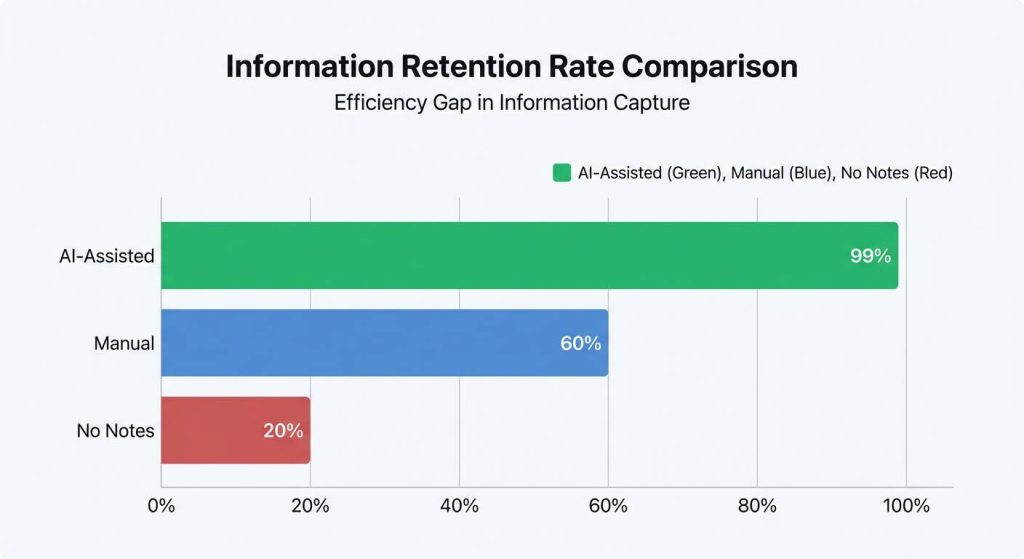
De traditionele rol van “aangewezen notulist” is snel aan het verdwijnen. Vanaf 2026 blijkt uit gegevens dat het handmatig maken van aantekeningen resulteert in een 30-40% verlies van kritieke informatie door menselijke afleiding. De verschuiving naar AI-gestuurde vastlegging is geen luxe, maar een vereiste voor goed presterende teams.
De verborgen kosten van handmatig notities maken
Als een medewerker een vergadering typt, neemt hij of zij niet volledig deel. Deze “verdeelde aandacht” leidt tot een lagere creatieve output en meer fouten. Bovendien is de tijd die besteed wordt aan het “opruimen” van notities na een vergadering gemiddeld 2,5 uur per week per werknemer - een enorme aanslag op de productiviteit van bedrijven.
Hoe AI-transcripties “nauwkeurigheid” opnieuw definiëren (De 99%-standaard)
Modern AI-modellen hebben de menselijke capaciteit in transcriptiesnelheid en -nauwkeurigheid overtroffen. bereiken 99% nauwkeurigheid betekent dat de spreker feilloos wordt geïdentificeerd, dat vakjargon wordt herkend en dat de resulterende tekst direct bruikbaar is voor besluitvorming zonder handmatig proeflezen.
Essentiële onderdelen van effectieve vergadernotities
Gestructureerde samenvattingen en belangrijke beslissingen
Een muur van tekst is nutteloos. Effectieve notities maken gebruik van gestructureerde overzichten die “De grote winsten” en “Belangrijke beslissingen” benadrukken. Zo kunnen teamleden die de vergadering gemist hebben in minder dan 60 seconden bijpraten.
Geautomatiseerde actie-items: Direct eigenaarschap toewijzen
Het belangrijkste deel van elke vergadering is de Actiepunt. In 2026 detecteren hoogwaardige tools automatisch zinnen als “Ik zal dat afhandelen” of “Laten we dit tegen vrijdag afhandelen” en zetten ze om in een checklist. Dit zorgt voor verantwoording zonder dat gegevens handmatig moeten worden ingevoerd.
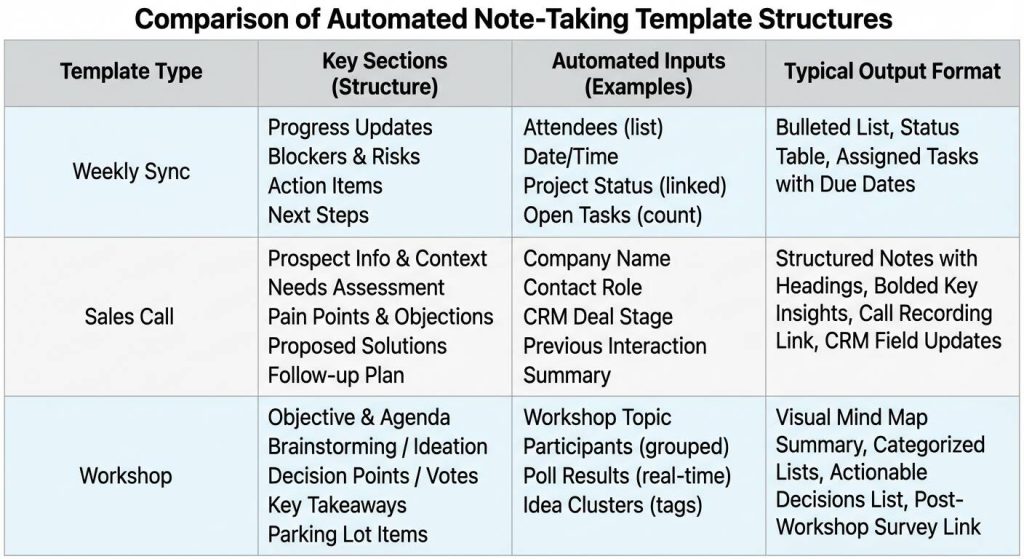
Contextbewuste sjablonen: Stand-ups vs. bestuursvergaderingen
Niet alle vergaderingen zijn gelijk. Een dagelijkse stand-up vereist een andere structuur dan een strategische directievergadering. VOMO detecteert automatisch de context van de vergadering en past de juiste sjabloon toe, zodat je notities altijd perfect opgemaakt zijn.
Notities schrijven voor vergaderingen (de moderne workflow)
Stap 1: Leg elk woord vast zonder te typen
Begin met het gebruik van een high-fidelity opnametool. In plaats van je te concentreren op je toetsenbord, concentreer je je op de ogen van je teamgenoten. Laat de AI de transcriptie op de achtergrond afhandelen.
Stap 2: Betekenis extraheren met AI vraag en antwoord
Lees na afloop van de vergadering niet alleen de notities voor, maar praat ook met ze. Gebruik AI VRAAG EN ANTWOORD om te vragen: “Waarover ging het budgetplafond?” of “Vat Sarah's bezorgdheid over de tijdslijn samen.” Dit verdiept de samenwerking en versnelt de afstemming na de vergadering.
Stap 3: Notities integreren in je Tech Stack
Je notities moeten daar zijn waar je werkt. Of het nu Slack, Notion of je CRM is, geautomatiseerde integratie zorgt ervoor dat de “Action Items” die tijdens de vergadering worden gegenereerd direct in je projectmanagementtools terechtkomen.
Veelgestelde vragen over vergadernotities
V1: Wat is de beste manier om Notities van vergaderingen organiseren?
De consensus onder productiviteitsexperts en gemeenschappen zoals r/Productiviteit is dat doorzoekbaarheid is de gouden standaard. Effectief organiseren:
- Centraliseren: Sla alle notities op in één doorzoekbare database in plaats van in verspreide bestanden.
- Taggen: Gebruik consistente tags (bijv. #ProjectX, #Budget, #Decision) voor kruisverwijzingen.
- Automatisering: Gebruik tools die notities automatisch categoriseren op datum, deelnemers en type vergadering.
V2: Wat is het verschil tussen notulen en aantekeningen?
Denk aan vergaderingsnotities als een routekaart voor het team - informeel, actiegericht en in realtime bijgewerkt. Notulen zijn de “officiële notulen” - formeel, wettelijk conform en moeten vaak worden goedgekeurd door een voorzitter. Voor de meeste interne teams zijn zeer nauwkeurige notities het waardevollere dagelijkse bezit.
V3: Kan AI transcriptie aan voor meerdere sprekers in een luidruchtige kamer?
Ja. Vanaf 2026, geavanceerde sprekersdagboek en ruisonderdrukkingstechnologieën kunnen hoogwaardige AI-tools onderscheid maken tussen maximaal 10 verschillende stemmen. Zelfs in suboptimale akoestische omgevingen kunnen deze systemen spraak isoleren van achtergrondgeluiden om een 99% nauwkeurigheidsgraad.
V4: Moet ik een sjabloon gebruiken voor mijn notities?
Absoluut. Het gebruik van een sjabloon zorgt voor consistentie en bespaart tijd. Moderne AI-assistenten bieden nu contextbewuste sjablonen die automatisch hun structuur aanpassen, of je nu een 1-op-1 gesprek voert, een dagelijkse stand-up of een verkoopgesprek met een hoge inzet.
