

Yes, CapCut can transcribe audio to text through its fonction d'auto-caption. Cet outil convertit automatiquement les mots prononcés dans votre vidéo ou votre piste audio en sous-titres à l'écran. Bien qu'il soit principalement conçu pour le montage vidéo, de nombreux créateurs l'utilisent comme outil de transcription rapide. Cependant, la transcription est principalement destinée aux sous-titres plutôt qu'à la production d'une transcription complète et téléchargeable.
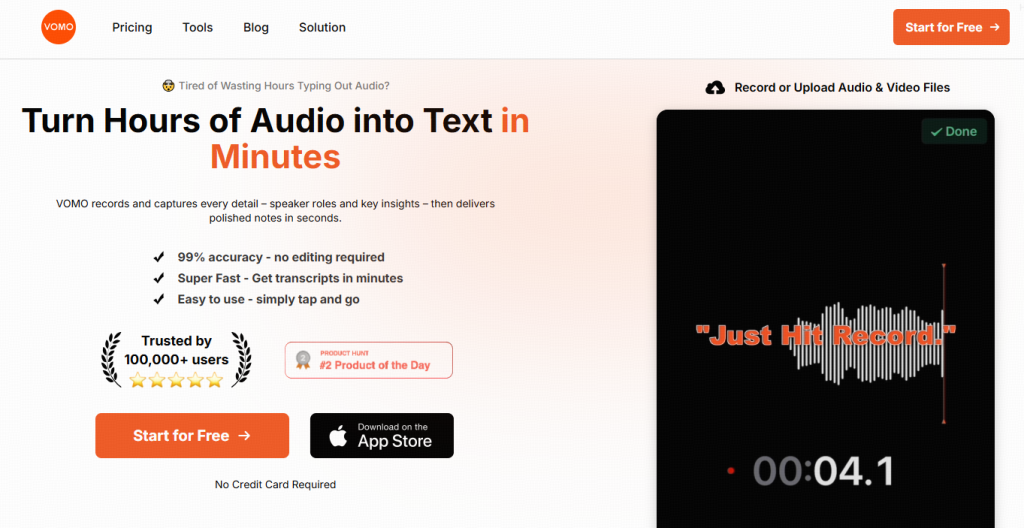
Si vous voulez more accurate or professional transcription services, you can try third-party tools such as Vomo.
Why CapCut Is Not a True Transcription Tool (From Real Testing)
After testing CapCut across multiple video types—including interviews, podcasts, and short-form content—it becomes clear that its transcription feature is not designed for full-text output.
CapCut focuses on subtitle generation inside the editing timeline, not structured transcription. This means:
- You cannot easily export long-form text
- Formatting is limited to caption style
- It’s optimized for editing—not reading or analysis
In real workflows, this creates friction when you try to reuse content outside the video editor.
The Hidden Workflow Problem: Why Creators Still Use Other Tools First
In practice, many creators do not rely on CapCut as their primary transcription tool.
A more efficient workflow often looks like this:
- Transcribe audio using a dedicated AI tool
- Export clean text or subtitles
- Import into CapCut for editing
This approach avoids the limitations of CapCut’s built-in captions and provides more control over accuracy, formatting, and structure.
Accuracy Issues: When CapCut Transcription Breaks Down
From testing across different audio conditions, accuracy can vary significantly depending on:
- Bruit de fond
- Intervenants multiples
- Fast speech or accents
Les problèmes les plus fréquents sont les suivants :
- Incorrect word segmentation
- Missing phrases
- Poor sentence structure
These problems become more noticeable in longer videos, where consistency matters more than a quick video to text conversion.
Timeline and Sync Problems in Long Videos
For short clips, CapCut performs reasonably well. However, with longer videos (10+ minutes), timing issues become more visible.
In real use cases:
- Subtitles may drift out of sync
- Sentence breaks feel unnatural
- Editing via transcript becomes less reliable
This makes CapCut less suitable for:
- Podcasts
- Interviews
- Educational content
Feature Instability Across Devices and Versions
One of the biggest usability challenges is inconsistency.
Depending on your device or version of CapCut:
- Some features may not appear
- Options like “transcript-based editing” may be missing
- UI changes frequently
This creates confusion and makes it difficult to build a reliable workflow compared to transcribing video on iPhone using native or dedicated apps.
Comment CapCut convertit automatiquement l'audio en texte
CapCut utilise la technologie de reconnaissance vocale pour générer des sous-titres directement dans votre ligne de temps d'édition. En téléchargeant votre fichier multimédia et en activant l'option "Auto Captions", le logiciel analyse l'audio, identifie les mots prononcés et les affiche instantanément sous forme de texte modifiable. Cela facilite la tâche des créateurs qui souhaitent conversion de l'audio en texte without leaving the editing platform.
CapCut pour les sous-titres vidéo en texte
One of CapCut’s most popular uses is generating subtitles from video content. The app detects voices in the track and automatically creates text captions. This video to text feature is especially valuable for YouTubers, TikTok creators, and online educators who want to make content more accessible and engaging with minimal manual typing.
Limites de la fonction de transcription de CapCut
Bien que CapCut offre une transcription pratique, il présente certaines limites :
- Les transcriptions sont essentiellement des documents basés sur des sous-titres et non des documents formatés.
- Accuracy depends on audio quality and background noise.
- Peu d'options de personnalisation par rapport aux logiciels de transcription professionnels.
If you need polished transcripts for meetings, interviews, or podcasts, a dedicated audio transcription tool peut être plus efficace.
Les meilleurs cas d'utilisation de CapCut Transcription
La transcription CapCut est idéale pour :
- Creators who want fast subtitles for social media videos.
- Les débutants qui ont besoin d'un moyen gratuit et intégré de générer du texte à partir de la parole.
- Projets pour lesquels la rapidité et la commodité sont plus importantes que la précision totale.
When CapCut Is Enough—and When It’s Not
CapCut works well for:
- Short-form videos (TikTok, Enrouleurs)
- Quick subtitle generation
- Basic editing workflows
However, it struggles with:
- Long-form transcription
- Exportable documents
- High-accuracy requirements
If your goal is content repurposing, analysis, or documentation, you will quickly outgrow its capabilities.
CapCut vs Professional Transcription Tools: What’s the Real Difference?
| Fonctionnalité | CapCut | Professional Tools |
|---|---|---|
| Output Type | Subtitles only | Full transcript + subtitles |
| Précision | Moyen | Haut |
| Identification de l'orateur | Limitée | Avancé |
| Options d'exportation | Restricted | Flexible (TXT, DOC, SRT) |
| Best Use Case | Video editing | Content repurposing & analysis |
This comparison highlights a key distinction:
👉 CapCut is a video editor with transcription features
👉 Professional tools are transcription platforms with editing support
The Real Goal: From Subtitles to Usable Content
Most users are not just trying to generate subtitles—they want:
- Texte consultable
- Résumés structurés
- Reusable content
This is where CapCut falls short.
To fully unlock the value of your content, you need tools that go beyond captions and turn video into actionable information.
Alternatives à CapCut pour la transcription
Si vous avez besoin d'une transcription de qualité professionnelle, des outils tels que Otter.ai, Descript ou Vomo peuvent générer des documents en texte intégral, permettre l'édition et même prendre en charge les traductions. Ces outils vont au-delà des sous-titres, offrant une solution complète pour les besoins de transcription des entreprises, des universités ou des professionnels.
