

Als je je afvraagt hoe lezingen uploaden naar AI, Het korte antwoord is: je kunt niet rechtstreeks video- of audiocolleges uploaden naar ChatGPT. Er zijn echter speciale AI transcriptie gereedschap dat maak het gemakkelijk om je lezingen om te zetten in tekst, Samenvattingen en doorzoekbare notities.
Deze tools besparen niet alleen tijd, maar helpen studenten en docenten ook om hun studiemateriaal effectiever te beheren. Laten we eens kijken wat de beste manieren zijn om opnames van colleges te verwerken met behulp van AI.
Waarom je geen colleges rechtstreeks naar ChatGPT kunt uploaden
Op dit moment, ChatGPT staat directe uploads van opnames van colleges niet toeof het nu video- of audiobestanden zijn. De AI is ontworpen voor tekstgebaseerde invoer, wat betekent dat het niet automatisch ruwe mediabestanden kan verwerken.
Als je wilt dat ChatGPT (of een andere AI-chatbot) helpt bij het samenvatten of analyseren van een lezing, moet je eerst je opname omzetten in tekst. Dat is waar AI-transcriptieplatforms om de hoek komen kijken: ze dienen als brug tussen je opgenomen inhoud en AI-ondersteunde leermiddelen.
Why Uploading Lectures to AI Still Feels Complicated
After testing multiple tools for lecture transcription and note generation, one issue becomes clear:
The workflow is still fragmented.
In de praktijk:
- One tool is used for transcription
- Another for summarization
- A third for organizing notes
This multi-step process slows down learning and creates unnecessary friction.
The Real Workflow: Upload → Transcript → Structured Notes
The most reliable workflow follows three steps:
- Upload lecture audio or video
- Generate a clean transcript
- Convert the transcript into structured notes
Skipping transcription often leads to poor summaries and missing key concepts. This step is essential for accurate and useful results.
AI-transcriptietools gebruiken om lezingen om te zetten
Naar lezingen uploaden en verwerken met AI, beginnen met ze om te zetten in tekst. Gespecialiseerd AI-transcriptietools kan automatisch spraak herkennen, sprekers identificeren en zeer nauwkeurige transcripties genereren.
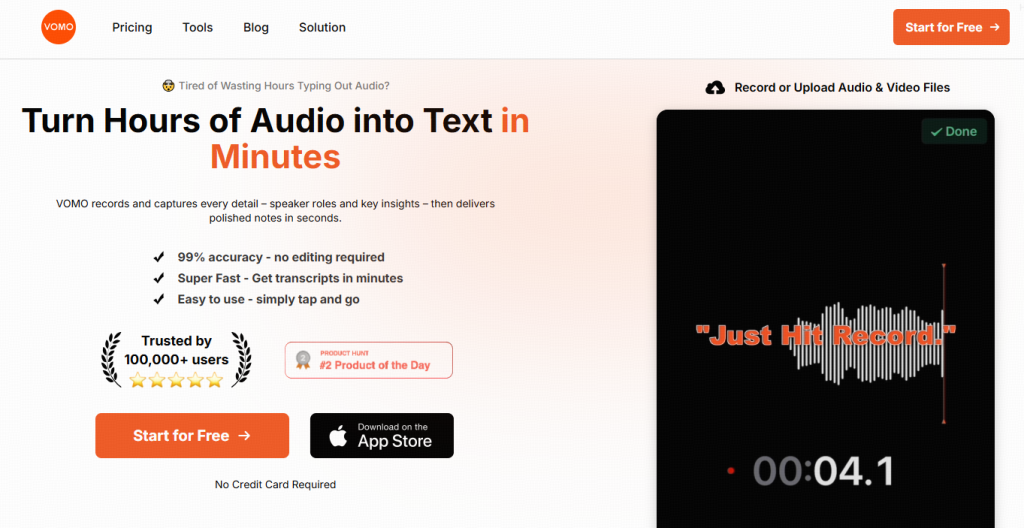
Onder deze hulpmiddelen, VOMO AI onderscheidt zich door zijn precisie, slimme samenvattingen en op hoofdstukken gebaseerde transcriptorganisatie, waardoor het ideaal is voor studenten en docenten.
Zo doe je dat:
- Ga naar VOMO.ai.
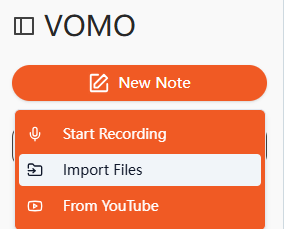
- Upload de opname van je hoorcollege (audio of video).
- Wacht een paar minuten terwijl de AI je audio naar tekst automatisch.
- Bekijk, bewerk en organiseer je transcript met behulp van de ingebouwde Smart Notes en hoofdstuksegmentatie.
Deze structuur helpt studenten om lange colleges efficiënt te volgen en zich te concentreren op de belangrijkste leerpunten.
Video's van lezingen omzetten in tekst
Als uw lezing is opgenomen als video, you can still process it using AI transcription tools that ondersteuning video naar tekst conversie. These platforms extract both the spoken content and contextual cues (like slide changes or speaker transitions) from your video.
VOMO AI, for example, allows you to upload an MP4 file or paste a YouTube lecture link. The AI then generates a full transcript, complete with summaries and topic divisions for improved readability.
Deze aanpak maakt het veel gemakkelijker om:
- Opgenomen lessen later terugkijken zonder de hele video opnieuw te bekijken.
- Maak doorzoekbare notities voor examenvoorbereiding.
- Deel samengevat materiaal met klasgenoten.
Why Raw Transcripts Are Not Enough for Learning
Many users assume transcripts alone are sufficient—but this is rarely the case.
In de praktijk:
- Transcripts are long and unstructured
- Filled with filler words and repetition
- Difficult to scan quickly
Without processing, transcripts become:
👉 hard to read
👉 inefficient for studying
Cleaning Transcripts: The Step Most People Skip
Before turning transcripts into notes, cleaning is essential.
Veel voorkomende problemen zijn onder andere:
- Filler words (“um”, “uh”)
- Repeated phrases
- Misheard words
Cleaning improves:
- Readability
- Summary quality
- Overall learning efficiency
The Biggest Challenge: Handling Long Lectures (1–3 Hours)
Long lectures introduce serious usability problems.
In echte scenario's:
- Transcripts can exceed 10,000–20,000 words
- Editing becomes overwhelming
- Finding key points is tijdrovend
This is why structuring and summarization are critical steps.
Why AI-Generated Notes Often Miss Important Concepts
AI summaries are not always reliable.
From testing different tools:
- Key ideas may be skipped
- Context may be lost
- Notes can feel too generic
This often happens when:
- Transcripts are inaccurate
- Prompts lack structure
- Content is too long or complex
From Transcript to Study Notes: What Actually Works
Effective study notes require structure.
The most useful notes include:
- Key concepts
- Samenvattingen
- Clear topic organization
- Bruikbare inzichten
This transforms transcripts into:
👉 usable study material
instead of
👉 raw text
Transcript + Slides: Why Context Improves Note Quality
Lecture content often includes visual elements.
In de praktijk:
- Slides contain key definitions
- Diagrams provide context
- Audio alone may miss important details
Combining transcripts with slides leads to more complete and accurate notes.
Transcript + Slides: Why Context Improves Note Quality
Lecture content often includes visual elements.
In de praktijk:
- Slides contain key definitions
- Diagrams provide context
- Audio alone may miss important details
Combining transcripts with slides leads to more complete and accurate notes.
A Smarter Workflow: All-in-One Lecture Processing
The most efficient setup combines:
- uploaden
- Transcriptie
- Note generation
- AI VRAAG EN ANTWOORD
Instead of switching between multiple tools, an integrated workflow saves time and effort.
Tools like VOMO AI bring all of these steps into one place.
Voordelen van het uploaden van lezingen naar AI-tools
Het gebruik van AI-tools zoals VOMO AI voor het transcriberen van colleges biedt een aantal belangrijke voordelen:
- Tijdbesparend: Zet uren aan opnames automatisch om in leesbare samenvattingen.
- Betere organisatie: Verdeelt transcripties in hoofdstukken voor een logisch verloop.
- Toegankelijkheid: Helpt studenten met gehoorproblemen of die de les hebben gemist.
- Productiviteitsstimulans: Moeiteloos studeren, citeren en refereren.
By transforming spoken lectures into text, you make your academic materials smarter, more searchable, and easier to retain.
Accuracy Still Matters: Why Good Audio Improves Results
Audiokwaliteit directly affects transcription quality.
In de praktijk:
- Background noise reduces accuracy
- Multiple speakers increase complexity
- Poor recordings lead to errors
Improving audio quality significantly improves results.
Accuracy Still Matters: Why Good Audio Improves Results
Audio quality directly affects transcription quality.
In de praktijk:
- Background noise reduces accuracy
- Multiple speakers increase complexity
- Poor recordings lead to errors
Improving audio quality significantly improves results.
Laatste gedachten
You can’t upload lectures directly to ChatGPT—but you can still use AI effectively by pairing it with transcriptietools. Platforms like VOMO AI let you upload lectures, transcribe them, and even summarize the key points instantly.
Zodra je je tekst hebt, kun je deze in ChatGPT (of een andere AI-assistent) brengen om vervolgvragen te stellen, flashcards te maken of samenvattingen te genereren.
Kortom, het uploaden van lezingen naar AI begint met ze eerst transcriberenen VOMO AI biedt de meest efficiënte en nauwkeurige manier om dat te doen.
