

Om een vergadering positief af te sluiten, reserveer je de laatste vijf minuten strikt voor een duidelijke opsomming van “actiepunten” en een specifieke dankbetuiging, gebruikmakend van de psychologische “Piek-eindregel”. Als deze afsluiting uitblijft, voelen deelnemers zich angstig en onzeker over hun volgende stappen, wat het moreel om zeep helpt, ongeacht hoe productief de discussie was. Een gestructureerde afsluiting zorgt ervoor dat iedereen vertrekt met het gevoel op één lijn te zitten, gewaardeerd te worden en duidelijk te weten wat hun verantwoordelijkheden zijn.
VOMO automatisch zet opnames om in gestructureerde vergadernotities met de belangrijkste punten en beslissingen, zodat je direct een foutloze samenvatting hebt om hardop voor te lezen als je afrondt. Met 99%-nauwkeurige transcriptie Zo hoef je je geen zorgen meer te maken dat je een taak mist en kun je je volledig richten op het afleveren van een zelfverzekerde, energieke slotverklaring.
De psychologie van een goed einde: De “Piek-eindregel”
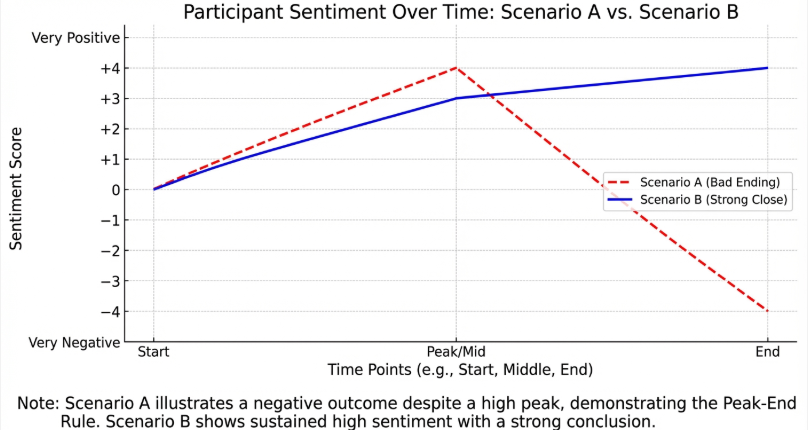
Het menselijk geheugen is geen videocamera; het is een highlight reel. Volgens de Regel voor piek-einde In de psychologie beoordelen deelnemers de kwaliteit van een volledige vergadering grotendeels op basis van hoe ze zich voelden op het hoogtepunt van de vergadering en, wat cruciaal is, hoe de vergadering eindigde. Een productieve sessie van 55 minuten kan worden verpest door een chaotisch of dubbelzinnig einde van 5 minuten.
- Duidelijkheid = positiviteit: Onderzoek toont consequent aan dat “ambiguïteit” een primaire oorzaak is van angst op het werk. Afsluiten met duidelijke vervolgstappen zorgt voor psychologische afsluiting.
- De “recency bias”: Het laatste wat gezegd wordt, is het eerste wat onthouden wordt. Als de vergadering eindigt met een klacht of een verwarde stilte, zal dat negatieve sentiment het vorige uur van vooruitgang overschaduwen.
5 stappen om elke vergadering professioneel af te sluiten
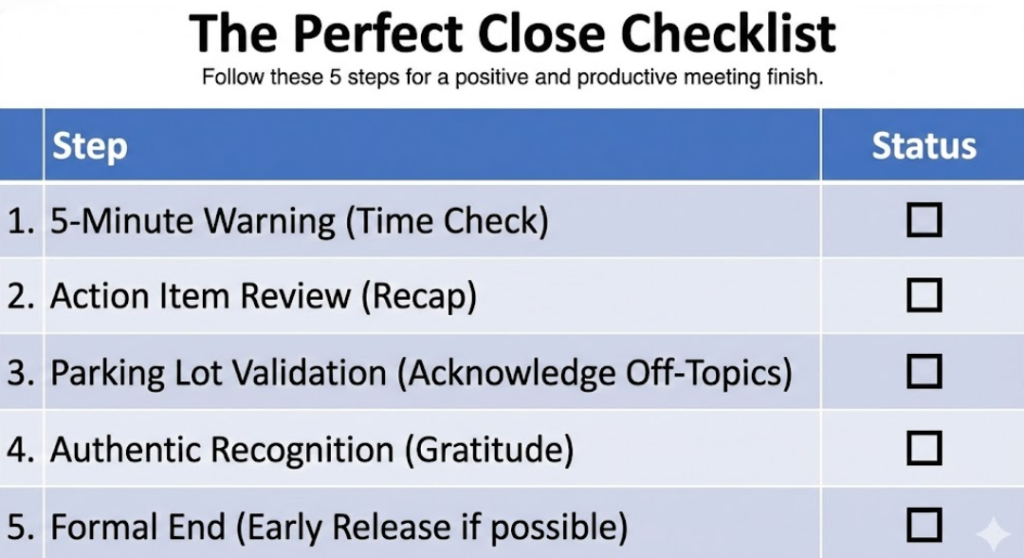
Om een positief einde te garanderen, heb je een herhaalbaar systeem nodig. Laat de laatste minuten niet aan het toeval over.
- De “5-minuten waarschuwing”: Respecteer de kalender. Door te zeggen “we hebben nog 5 minuten” laat je zien dat je de controle hebt en ieders tijd waardeert.
- De “Action Item” beoordeling: Hang nooit op zonder te antwoorden: Wie doet wat wanneer? Dit voorkomt de verwarring die vaak optreedt bij het leren van hoe notulen maken.
- De “Parking Lot” Validatie: Als er ideeën zijn geopperd die niet bij het onderwerp horen, erken ze dan nu: “We hebben X niet kunnen bespreken, maar ik heb het genoteerd voor volgende week.” Hierdoor voelen mensen zich gehoord.
- Authentieke erkenning: Geef een specifieke shout-out. In plaats van een algemene “Bedankt team”, zeg “Bedankt Sarah voor die gegevens over de Q3 projectie, dat heeft onze strategie echt verduidelijkt.”
- De “vervroegde vrijlating”: 3 minuten tijd teruggeven is de ultieme morele opkikker in een cultuur van achter elkaar vergaderen.
Recap Angst“ elimineren met AI Automatisering
De belangrijkste reden waarom hosts er niet in slagen om sterk af te sluiten is cognitieve overbelasting. Het is moeilijk om een gesprek te voeren, de tijd te managen en tegelijkertijd nauwkeurige actiepunten op te schrijven om Notities van vergaderingen effectief samenvatten.
Met VOMO kun je je richten op de levering, niet op de documentatie.
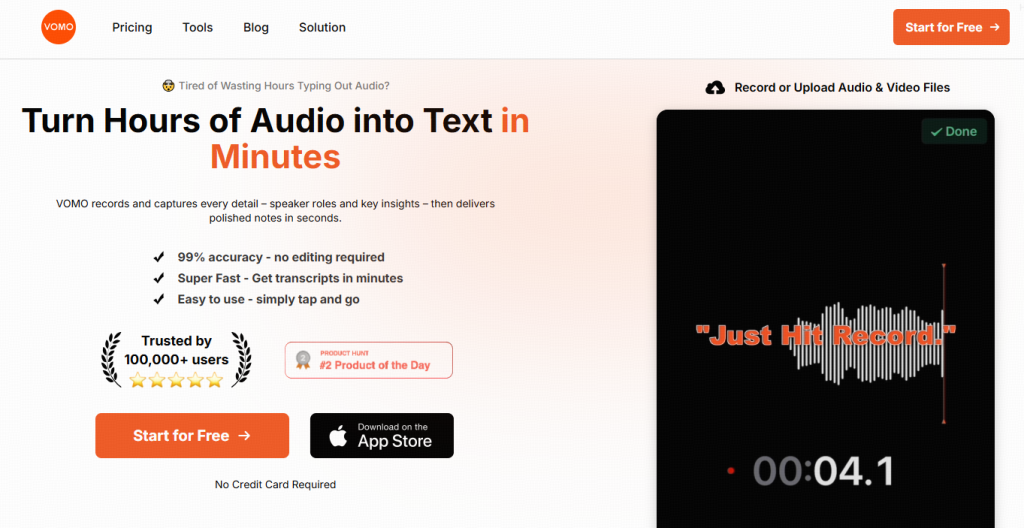
- Instant Samenvattingen: VOMO zet opnames automatisch om in gestructureerde vergadernotities. Dit zorgt ervoor dat u wat wel en niet in de notulen moet staan zonder handmatige inspanning.
- Nauwkeurigheid waarop je kunt vertrouwen: Met 99%-nauwkeurige transcriptie en sprekeridentificatie hoeft u zich geen zorgen te maken dat u een belanghebbende verkeerd hebt geïnterpreteerd tijdens de afsluiting.
- Snelle verwerking: VOMO levert transcripties en samenvattingen in minuten, niet in uren. Hierdoor kun je beloven: “Ik stuur de notities meteen op” en die belofte ook echt nakomen, wat het positieve einde versterkt.
10 scripts om een vergadering te beëindigen (echte voorbeelden)
Gebruik deze scripts om zelfverzekerd en positief te klinken, ongeacht de context van de vergadering of Hoe maak je notities voor elke vergadering?.
Voor de wekelijkse stand-up (actiegericht):
- “Geweldige energie vandaag. We hebben onze doelen. Laten we deze week gaan verpletteren.”
- “Bedankt voor de updates. Het klinkt alsof we het allemaal eens zijn over de lancering. Laten we het waarmaken.”
- “Kort en bondig vandaag. Ik geef jullie allemaal 10 minuten terug. Geniet van de voorsprong!”
Voor probleemoplossing/crisis (veerkracht):
- “Dit was een moeilijk onderwerp, maar ik waardeer de eerlijkheid in de zaal. We hebben nu een solide plan om het op te lossen.”
- “We hebben vandaag niet alles opgelost, maar we hebben wel de hoofdoorzaak geïdentificeerd. Dat is een grote stap voorwaarts. Bedankt.”
- “Ik waardeer hoe we dit constructief hebben gehouden ondanks de druk. Geweldig teamwork.”
Voor 1-op-1 (ondersteunend):
- “Ik verlaat onze chats altijd met een duidelijker gevoel over prioriteiten. Bedankt voor je transparantie.”
- “Is er nog iets dat ik kan doen om je te steunen voordat we volgende week praten?”
Voor het overschrijden van de tijd (respectvol):
- “Mijn excuses dat we 5 minuten te lang zijn doorgegaan. Ik waardeer uw tijd en zal ons volgende week strakker houden. Bedankt dat u bent gebleven.”
Voor hybride/afstandsgesprekken (inclusief):
“Ik waardeer het dat iedereen vanuit verschillende tijdzones heeft ingebeld. Jullie input maakte deze sessie productief.”
“Bedankt aan iedereen op Zoom voor jullie geduld met de audio. We zullen ervoor zorgen dat de VOMO-notities worden verstuurd, zodat je niets hebt gemist.”
“Laten we voordat we uitloggen een snelle ronde doen: Eén belangrijke afleiding van het gesprek van vandaag.”
3 veelvoorkomende “Vibe Killers” om te vermijden
Zelfs een geweldige vergadering kan verpest worden door deze afsluitfouten:
- De “Nog andere vragen? Valstrik: Deze open vraag nodigt uit tot nieuwe onderwerpen terwijl je eigenlijk zou moeten afsluiten. Beter alternatief: “Heeft iemand een kritieke blokkering voordat we breken?”
- De “Valse sluiting”: Zeggen “Oké, we zijn klaar” en je dan herinneren “Oh, nog één ding...” vernietigt de psychologische bevrijding van het einde.
- De “Spookuitgang”: Bij vergaderingen op afstand voelt het abrupt klikken op “Einde vergadering” alsof je de deur dichtslaat. Zwaai of zeg altijd een laatste “Dag iedereen” voordat je de verbinding verbreekt.
Conclusie: Een sterke finish is een systeem, geen toevalstreffer
Het consistent bereiken van een succesvol resultaat is geen toeval. Het vereist het overstappen van ad-hocmethoden naar een betrouwbaar, herhaalbaar kader. Zonder een systeem gaan waardevolle inzichten vaak verloren in vergeten notitieboekjes of ongelezen audiobestanden.
Een robuuste workflow zet ruwe discussies onmiddellijk om in gestructureerde, bruikbare output. Deze verschuiving zorgt ervoor dat elke vergadering zich vertaalt in tastbare vooruitgang in plaats van een statische opname te blijven.
Uiteindelijk zit het verschil tussen alleen maar bezig zijn en echt productief zijn vaak in de hulpmiddelen die worden gebruikt en het beslissen over wie moet aantekeningen maken in een vergadering. Een geautomatiseerde workflow implementeren, zoals het gebruik van VOMO om audio direct om te zetten naar gestructureerde notes-is niet alleen een gemak; het is een strategie om nauwkeurigheid en verantwoordelijkheid te garanderen lang nadat het gesprek is beëindigd.
