


للتلخيص ملاحظات الاجتماع التركيز بفعالية على تسجيل القرارات رفيعة المستوى، وعناصر العمل مع المالكين المعينين، والسياق الاستراتيجي بدلاً من النص الحرفي. استخدم تنسيقًا منظمًا مثل إطار عمل “المناقشة-القرار-المهلة” لضمان أن يكون الملخص قابلاً للقشط وقابلاً للتنفيذ الفوري لجميع أصحاب المصلحة.
للحصول على نتائج فورية، فإن VOMO تلقائيًا تحويل التسجيلات إلى ملاحظات اجتماعات منظمة مع النقاط الرئيسية والقرارات وعناصر العمل.
لقد مررنا جميعًا بهذا الموقف: أنت عالق في اجتماع هام، وتكتب كل كلمة بشكل محموم لضمان عدم انزلاق أي شيء من خلال الشقوق. وبحلول الوقت الذي تنتهي فيه من تنسيق “حائط النص”، يكون نصف اليوم قد انتهى، ومن المحتمل ألا يقرأ فريقك المستند على أي حال لأنه يفتقر إلى الوضوح والتركيز. إن التلخيص الفعال لا يتعلق بكتابة المزيد؛ بل يتعلق بالتقاط الأقل - وتحديداً الإشارة وسط الضوضاء. وسواء كنت تستخدم إطار عمل يدوي أو أدوات ذكاء اصطناعي متقدمة، فإن الهدف هو تحويل ساعات من الحديث إلى دقائق من القراءة.
لتبسيط هذه العملية، يقدم VOMO نصوصًا دقيقة للغاية مع تحديد هوية المتحدث، بحيث لا تحتاج إلى قضاء الوقت في التحرير أو إصلاح الأخطاء.
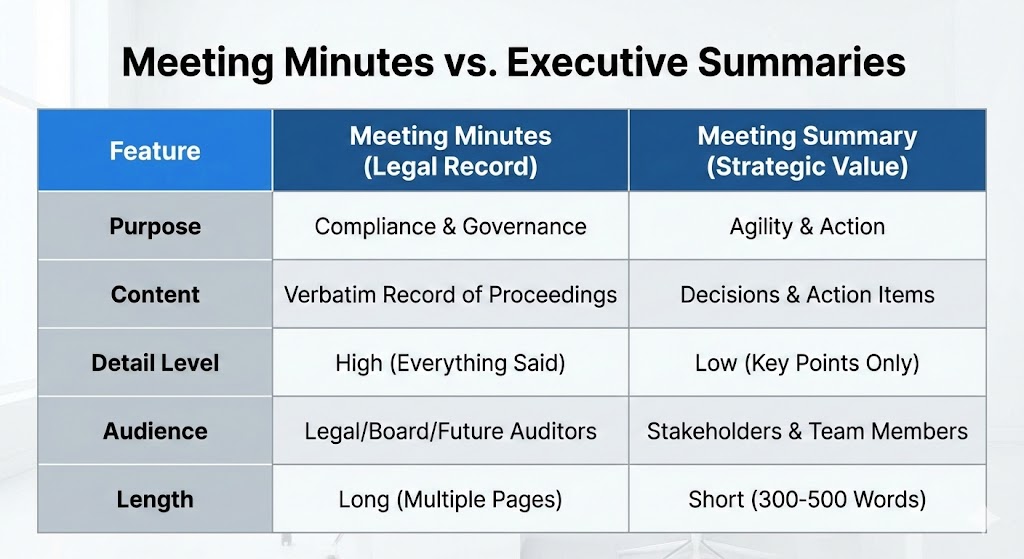
محاضر الاجتماعات مقابل الملخصات التنفيذية: الاختلافات الرئيسية
السجل القانوني (المحاضر) مقابل القيمة الاستراتيجية (الملخص)
بينما يستخدم العديد من المتخصصين المصطلحين بالتبادل, محاضر الاجتماعات و ملخصات الاجتماعات تخدم أغراضاً مختلفة جوهرياً. فالمحاضر هي محاضر رسمية وحرفية للإجراءات، وغالباً ما تكون مطلوبة للامتثال القانوني أو لإدارة مجلس الإدارة. وهي توثق كل شيء قال لضمان وجود سجل تاريخي.
وعلى النقيض من ذلك، فإن ملخص الاجتماع هي أداة استراتيجية مصممة لتحقيق المرونة. هدفها الأساسي هو إبلاغ أصحاب المصلحة بالنتيجة وليس العملية. يقوم الملخص الفعال بتصفية “هو قال، هي قالت” ويركز بدقة على القرارات المتخذة والالتزامات المستقبلية. إن إعطاء الأولوية للملخصات على الدقائق يوفر على الفرق ساعات من وقت القراءة كل أسبوع.
كم يجب أن يكون طول ملخص الاجتماع؟
القاعدة الأساسية الجيدة لعام 2026 هي “قاعدة الشاشة الواحدة”. إذا اضطر أحد أصحاب المصلحة إلى التمرير أكثر من مرة على جهاز محمول للعثور على عناصر الإجراءات، فهذا يعني أن الملخص طويل جدًا. استهدف ما يلي 300 إلى 500 كلمة, ، بغض النظر عن مدة الاجتماع.
إطار عمل “القرار أولاً” لتدوين الملاحظات اليدوي
تكييف طريقة كورنيل للاجتماعات الحديثة
الكلاسيكية طريقة كورنيل تظل فعالة للغاية في التلخيص اليدوي. قسّم صفحتك إلى ثلاثة أقسام:
- عمود الملاحظات (يمين): التقط الأفكار والحجج الرئيسية خلال الاجتماع.
- عمود الإشارات (يسار): بعد الاجتماع، اسحب الكلمات الرئيسية والأسئلة الرئيسية.
- قسم الملخص (في الأسفل): اكتب تلخيصاً من جملتين إلى ثلاث جمل للمناقشة بأكملها.
استراتيجية “الأعمدة الثلاثة”: المناقشة والقرار والموعد النهائي
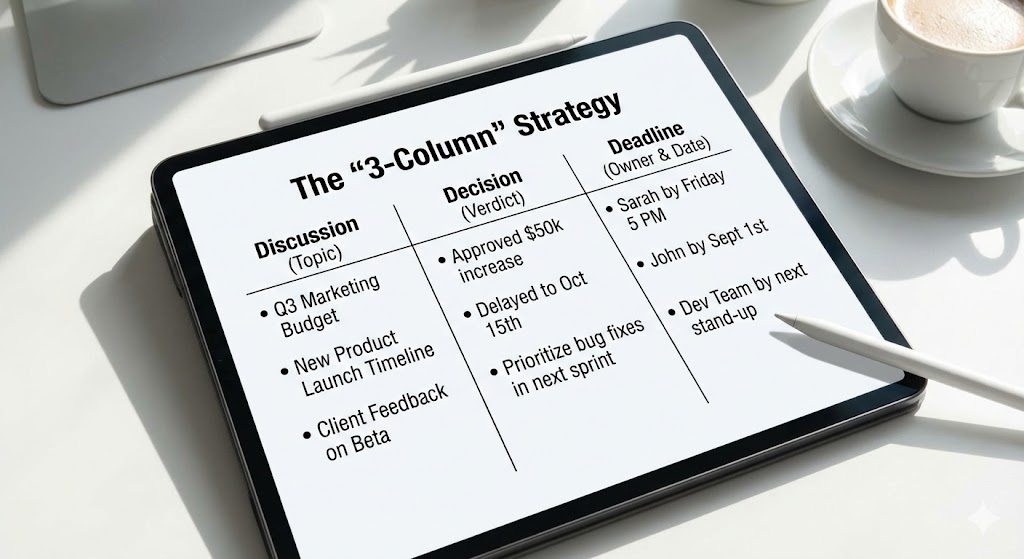
بالنسبة لـ إدارة المشاريع الاجتماعات، قم بتبسيط ملاحظاتك في ثلاثة أعمدة متميزة. هذا يجبرك على تصنيف المعلومات في الوقت الفعلي:
- المناقشة: دوّن الموضوع بإيجاز (على سبيل المثال، “ميزانية التسويق للربع الثالث”).
- القرار: سجل الحكم النهائي (على سبيل المثال، “تمت الموافقة على زيادة $50k”).
- الموعد النهائي: تعيين تاريخ ومالك محدد (على سبيل المثال، “جون لتحديث جدول البيانات بحلول يوم الجمعة”).
كيفية تدوين الملاحظات دون فقدان التركيز؟
مدونو ملاحظات من ذوي الخبرة التأكيد على أهمية “التوليف وليس التدوين”. إن محاولة كتابة كل كلمة تخلق حملًا إدراكيًا زائدًا. بدلاً من ذلك، ركز فقط على التغييرات في الموضوع أو الاتفاقات المؤكدة.
كيفية كتابة ملخص الاجتماع في 5 خطوات
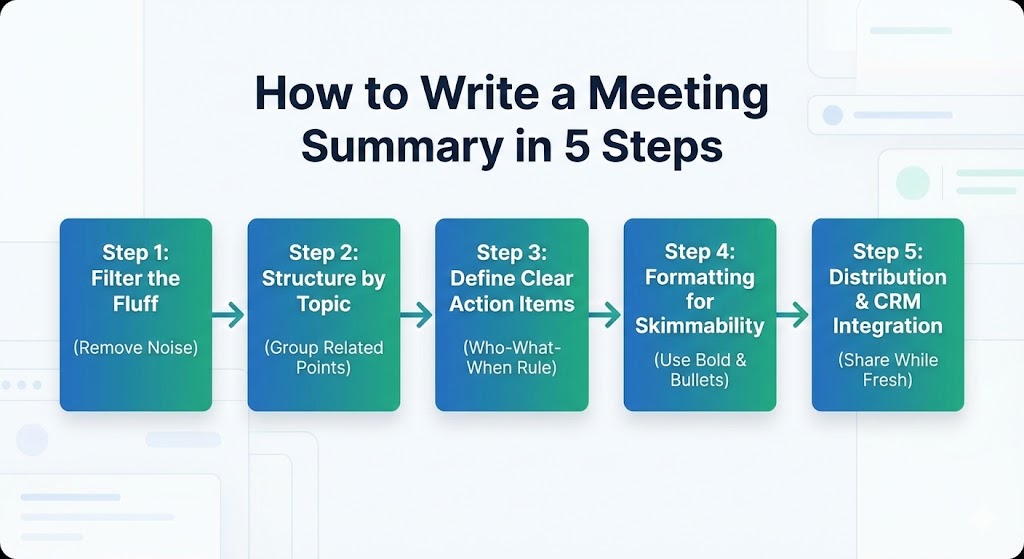
الخطوة 1: تصفية الزغب (الإشارة مقابل الضوضاء)
راجع ملاحظاتك الأولية واحذف بلا رحمة 50-70% من المحتوى. قم بحذف المجاملات والحجج الدائرية وأفكار العصف الذهني التي لم تؤدِ إلى نتيجة. الهدف هو ارتفاع نسبة الإشارة إلى الضوضاء.
الخطوة 2: الترتيب حسب الموضوع وليس حسب التسلسل الزمني
لا تكتب “تحدثنا أولاً عن س، ثم تحدثنا عن ص.” قم بتجميع النقاط ذات الصلة معًا بشكل منطقي. على سبيل المثال، قم بتجميع جميع القرارات المتعلقة بالميزانية تحت عنوان “الشؤون المالية”، حتى لو تمت مناقشتها في أوقات مختلفة خلال الاجتماع.
الخطوة 3: تحديد عناصر العمل الواضحة (قاعدة “من وماذا ومتى”)
الغموض يقتل الإنتاجية. يجب أن يتبع كل عنصر عمل ثالوث “من-ما-ما-متى”.
- سيء: “أطلع الفريق على آخر المستجدات حول التقدم المحرز.”
- جيد: “سارة (من) لإرسال التقرير الأسبوعي عبر البريد الإلكتروني (ماذا) بحلول الساعة 5 مساءً الثلاثاء (متى).”
الخطوة 4: التنسيق لقابلية القشط
الاستخدام نص بخط عريض للمالكين والمواعيد النهائية. استخدم النقاط النقطية للقوائم. تجنب الفقرات الطويلة. يجب أن يكون صاحب المصلحة قادرًا على مسح المستند في 30 ثانية ومعرفة ما هو مطلوب منه بالضبط.
الخطوة 5: التوزيع وتكامل إدارة علاقات العملاء
أرسل الملخص في غضون ساعة من الاجتماع بينما يكون السياق جديداً. بالنسبة لاجتماعات المبيعات أو اجتماعات العملاء، انسخ النقاط الرئيسية مباشرةً في نظام إدارة علاقات العملاء لضمان وصول البيانات إلى المؤسسة الأوسع نطاقاً.
سير عمل “التحرير الصفري”: أتمتة الملخصات باستخدام الذكاء الاصطناعي
لماذا تُعد دقة النسخ 99% مهمة للملخصات
تعتمد جودة ملخص الذكاء الاصطناعي بشكل مباشر على جودة النص. إذا “سمع” الذكاء الاصطناعي أرقامًا أو أسماءً خاطئة، فسيكون الملخص غير صحيح من الناحية الواقعية. يوفر VOMO نصوصًا دقيقة للغاية مع تحديد هوية المتحدث، لذلك لا تحتاج إلى قضاء الوقت في تحرير أو إصلاح الأخطاء قبل التلخيص. تعمل هذه الدقة كأساس للملاحظات الآلية الموثوقة.
الاستفادة من القوالب الذكية للسياق
تتطلب جلسة العصف الذهني صيغة ملخص مختلفة عن اجتماع مجلس الإدارة الفصلي. غالبًا ما تفشل أدوات الذكاء الاصطناعي العامة هنا. تكتشف VOMO سياق الاجتماع وتطبق قالب الملاحظات الصحيح تلقائيًا. وهذا يضمن الحصول على ملخص تقني للموقف الفني، بينما تحصل مقابلة العميل على ملخص تقني بأسلوب الأسئلة والأجوبة، دون الحاجة إلى إعداد يدوي.
من الصوت إلى الملاحظات القابلة للتنفيذ
الاختراق النهائي للكفاءة هو تجاوز توليد النص بالكامل. فبدلاً من توليد حائط من النصوص، يقوم VOMO تلقائيًا بتحويل التسجيلات إلى نصوص منظمة ملاحظات الاجتماع بالنقاط الرئيسية والقرارات وعناصر العمل. يؤدي هذا بشكل فعال إلى إزالة “الخطوة 3” اليدوية من سير العمل أعلاه، مما يضمن التقاط المهام فور توقف التسجيل.
التكتيكات المتقدمة: تحويل الصوت إلى ذكاء عملي قابل للتنفيذ
“الدردشة” مع ملاحظاتك: استخدام الذكاء الاصطناعي للأسئلة والأجوبة
تقتصر الملخصات الثابتة على ما يعتقد الكاتب أنه مهم. تسمح تقنية 2026 بالاستجواب التفاعلي للبيانات. باستخدام VOMO، يمكنك طرح أسئلة مباشرةً حول تسجيلاتك. يمكن إدراج إجابات الذكاء الاصطناعي في الملاحظات لتعميق الفهم وتسريع التعاون، مما يسمح لك بالعثور على تفاصيل محددة مثل “ما هو اعتراض العميل على الميزانية؟.
التعامل مع التسجيلات الطويلة
قد يستغرق تلخيص ورشة عمل مدتها 3 ساعات يدويًا ساعة أو أكثر. يسمح لك VOMO بالحصول على النصوص والملخصات في دقائق، وليس ساعات، حتى بالنسبة للاجتماعات أو المقابلات الطويلة. هذه السرعة ضرورية للفرق التي تجري سباقات سريعة متتالية وتحتاج إلى توثيق فوري.
دليل القرار: التلخيص اليدوي مقابل التلخيص المدعوم بالذكاء الاصطناعي
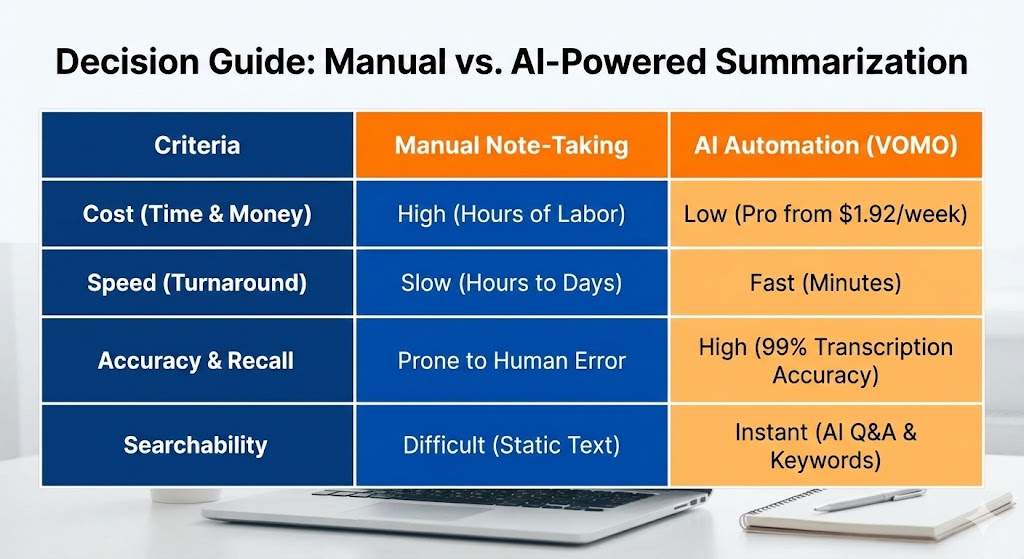
تحليل التكلفة مقابل الوقت
عند الاختيار بين الطرق اليدوية والذكاء الاصطناعي، ضع في اعتبارك تكلفة العمالة. إذا كان المدير يتقاضى 1 تيرابايت في الساعة وينفق 4 ساعات في الأسبوع على الملاحظات، فهذا يعني 1 تيرابايت في الأسبوع أو 1 تيرابايت في الشهر في الإنتاجية المفقودة.
- التكلفة اليدوية: استثمار كبير للوقت، وعرضة للخطأ البشري.
- تكلفة VOMO مجاناً يحصل المستخدمون على 30 دقيقة من الاستخدام، بينما محترف تبدأ الخطط من $1.92 دولار/الأسبوعي (خطة سنوية) للنسخ غير المحدود.
متى تلتزم بالملاحظات اليدوية
على الرغم من قوة الذكاء الاصطناعي، إلا أنه لا يزال يُنصح بتدوين الملاحظات اليدوية للمحادثات الحساسة للغاية وغير المسجلة حيث لا يُسمح بالبصمة الرقمية، أو للتعلم الشخصي حيث يساعد فعل الكتابة على الاحتفاظ بالذاكرة.
الأسئلة الشائعة (FAQ)
كيف يمكنني تلخيص اجتماع لم أحضره؟
اطلب التسجيل والنص. استخدم أداة ذكاء اصطناعي مثل VOMO لإنشاء ملخص “النقاط الرئيسية”. ركز على قسمي “القرارات” و“بنود العمل” لفهم النتائج دون الحاجة إلى الاستماع إلى التسجيل الصوتي الكامل.
ما هي أفضل أداة ذكاء اصطناعي لملخصات الاجتماعات في عام 2026؟
تجمع أفضل أداة بين الدقة العالية والوعي بالسياق. ابحث عن المنصات التي تقدم 99% دقة النسخ و القوالب الذكية التي تتكيف مع أنواع الاجتماعات المختلفة تلقائيًا.
يسمح لك VOMO بتسجيل وتدوين وإنشاء ملخصات قابلة للتنفيذ في مكان واحد، مما يحل فعليًا محل تدوين الملاحظات اليدوي إلى الأبد.
