

Yes, CapCut can transcribe audio to text through its auto-caption feature. This tool automatically converts spoken words in your video or audio track into on-screen subtitles. While it’s primarily designed for video editing, many creators use it as a quick transcription tool. However, the transcription is mainly for subtitles rather than producing a full, downloadable transcript.
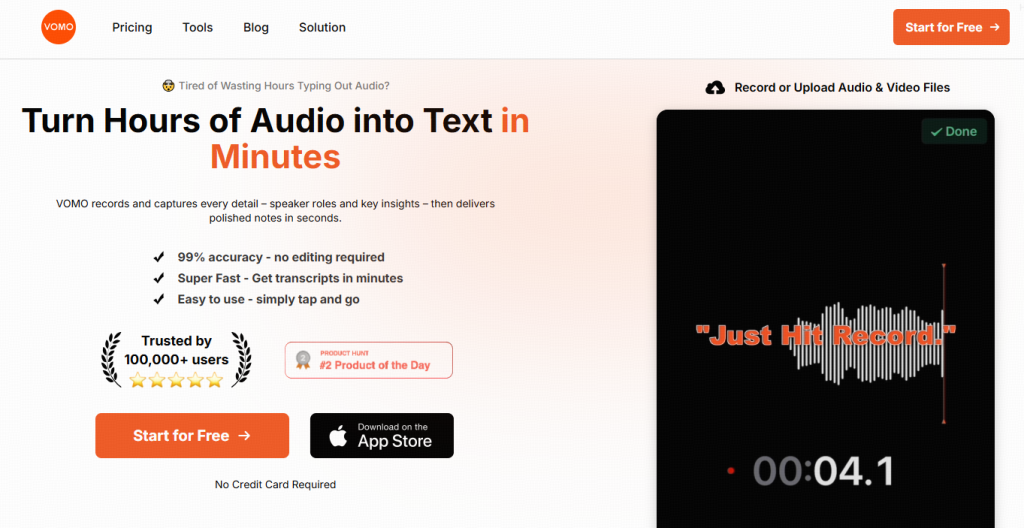
If you want more accurate or professional transcription services, you can try third-party tools such as Vomo.
Why CapCut Is Not a True Transcription Tool (From Real Testing)
After testing CapCut across multiple video types—including interviews, podcasts, and short-form content—it becomes clear that its transcription feature is not designed for full-text output.
CapCut focuses on subtitle generation inside the editing timeline, not structured transcription. This means:
- You cannot easily export long-form text
- Formatting is limited to caption style
- It’s optimized for editing—not reading or analysis
In real workflows, this creates friction when you try to reuse content outside the video editor.
The Hidden Workflow Problem: Why Creators Still Use Other Tools First
In practice, many creators do not rely on CapCut as their primary transcription tool.
A more efficient workflow often looks like this:
- Transcribe audio using a dedicated AI tool
- Export clean text or subtitles
- Import into CapCut for editing
This approach avoids the limitations of CapCut’s built-in captions and provides more control over accuracy, formatting, and structure.
Accuracy Issues: When CapCut Transcription Breaks Down
From testing across different audio conditions, accuracy can vary significantly depending on:
- Background noise
- Multiple speakers
- Fast speech or accents
Common issues include:
- Incorrect word segmentation
- Missing phrases
- Poor sentence structure
These problems become more noticeable in longer videos, where consistency matters more than a quick video to text conversion.
Timeline and Sync Problems in Long Videos
For short clips, CapCut performs reasonably well. However, with longer videos (10+ minutes), timing issues become more visible.
In real use cases:
- Subtitles may drift out of sync
- Sentence breaks feel unnatural
- Editing via transcript becomes less reliable
This makes CapCut less suitable for:
- Podcasts
- Interviews
- Educational content
Feature Instability Across Devices and Versions
One of the biggest usability challenges is inconsistency.
Depending on your device or version of CapCut:
- Some features may not appear
- Options like “transcript-based editing” may be missing
- UI changes frequently
This creates confusion and makes it difficult to build a reliable workflow compared to transcribing video on iPhone using native or dedicated apps.
How CapCut Converts Audio to Text Automatically
CapCut uses speech recognition technology to generate subtitles directly inside your editing timeline. By uploading your media file and enabling “Auto Captions,” the software scans the audio, identifies spoken words, and instantly displays them as editable text. This makes it easy for creators who want audio to text conversion without leaving the editing platform.
CapCut for Video to Text Subtitles
One of CapCut’s most popular uses is generating subtitles from video content. The app detects voices in the track and automatically creates text captions. This video to text feature is especially valuable for YouTubers, TikTok creators, and online educators who want to make content more accessible and engaging with minimal manual typing.
Limitations of CapCut’s Transcription Feature
Although CapCut provides convenient transcription, it does have some limitations:
- Transcriptions are primarily subtitle-based, not formatted documents.
- Accuracy depends on audio quality and background noise.
- Fewer customization options compared to professional transcription software.
If you need polished transcripts for meetings, interviews, or podcasts, a dedicated audio transcription tool may be more effective.
Best Use Cases for CapCut Transcription
CapCut transcription is ideal for:
- Creators who want fast subtitles for social media videos.
- Beginners who need a free, built-in way to generate text from speech.
- Projects where speed and convenience matter more than full accuracy.
When CapCut Is Enough—and When It’s Not
CapCut works well for:
However, it struggles with:
- Long-form transcription
- Exportable documents
- High-accuracy requirements
If your goal is content repurposing, analysis, or documentation, you will quickly outgrow its capabilities.
CapCut vs Professional Transcription Tools: What’s the Real Difference?
| Feature | CapCut | Professional Tools |
|---|---|---|
| Output Type | Subtitles only | Full transcript + subtitles |
| Accuracy | Medium | High |
| Speaker Identification | Limited | Advanced |
| Export Options | Restricted | Flexible (TXT, DOC, SRT) |
| Best Use Case | Video editing | Content repurposing & analysis |
This comparison highlights a key distinction:
👉 CapCut is a video editor with transcription features
👉 Professional tools are transcription platforms with editing support
The Real Goal: From Subtitles to Usable Content
Most users are not just trying to generate subtitles—they want:
- Searchable text
- Structured summaries
- Reusable content
This is where CapCut falls short.
To fully unlock the value of your content, you need tools that go beyond captions and turn video into actionable information.
Alternatives to CapCut for Transcription
If you need professional-grade transcription, tools like Otter.ai, Descript, or Vomo can generate full text documents, allow editing, and even support translations. These tools go beyond subtitles, offering a complete solution for business, academic, or professional transcription needs.
